
When Plans Meet Reality
Synopsis
Every scheduling model assumes a world that behaves. Factories rarely do.
This is Part 3 of our three-part series on manufacturing scheduling, using a pizza kitchen to explain concepts that often get lost in technical language. After exploring setup logic in Part 1 and sequencing rules in Part 2, this final article focuses on what happens when carefully built schedules collide with reality.
Machines fail. Quality issues appear. Materials arrive late. People are unavailable. None of this means the planning logic was flawed. It means execution has begun.
The article draws a crucial distinction between plans, schedules, and commitments. Replanning is easy. Constant rescheduling is destructive. Mature scheduling setups balance responsiveness with stability through frozen horizons, decision rights, and clear governance around exceptions.
The deeper message is about behaviour. Scheduling systems amplify how organisations make decisions. Without clarity on who intervenes, when, and why, even advanced tools generate noise instead of guidance.
This final piece brings the series back to its core theme: scheduling succeeds when it is designed to recover, not to impress. For organisations whose schedules look sophisticated but struggle under pressure, this perspective helps reframe the real problem.
Main Article
Helmuth von Moltke the Elder, Chief of the Prussian General Staff, famously observed that “No plan survives first contact with the enemy.” He was speaking about warfare, but he could just as easily have been describing manufacturing schedules.
In Parts 1 and 2, we discussed setup times, sequencing logic, and scheduling heuristics, all built on careful assumptions about resources, demand, and flow. What those models quietly assume is a stable world, one where machines behave, materials arrive on time, quality passes inspection, and people are available when expected. Anyone who has spent time on a factory floor knows how fragile that assumption really is.
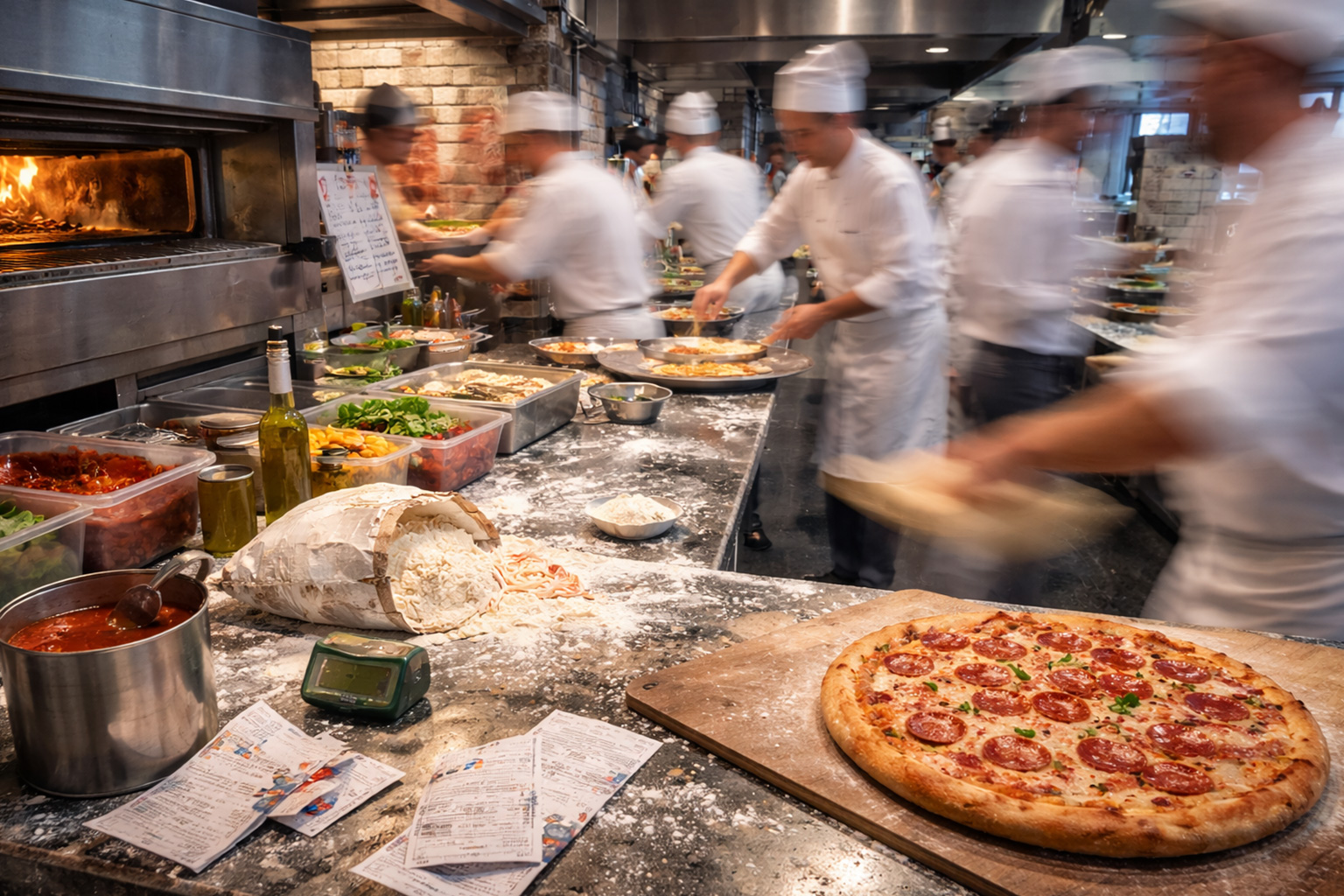
Back in our pizza kitchen, you may have sequenced vegetarian, meat, and seafood pizzas perfectly, minimised changeovers, and balanced efficiency against customer promises. Then the oven temperature fluctuates, a seafood batch fails quality checks, an operator calls in sick, or a delivery slot disappears. Nothing about your scheduling logic was wrong, yet the schedule is now broken. Not because the mathematics failed, but because reality intervened.
This is where many organisations struggle to draw a clear distinction. A plan is a calculation. A schedule is a commitment. Execution is where both are tested.
In SAP terms, regenerating a plan is straightforward. Replanning can be done quickly and repeatedly. But constant rescheduling introduces nervousness into the system. Each change ripples through production, procurement, logistics, and customer commitments. When everything is always changing, planners stop trusting the system, operators stop following it, and the schedule becomes background noise rather than a decision-making tool.
This is why mature scheduling setups are not obsessed with optimisation alone. They are designed to balance responsiveness with stability. Frozen horizons exist for a reason. Some decisions are deliberately protected to preserve downstream sanity, while others are kept flexible to absorb shocks. Knowing which decisions belong where is not a software problem. It is a governance problem.
This is also where roles matter more than algorithms. Who decides when a schedule should be overridden. Who speaks to the customer when a promise must move. Who engages vendors when lead times slip. Who decides which exception is worth acting on today and which can wait until tomorrow. If these responsibilities are unclear, no amount of advanced scheduling capability will compensate.
There is an uncomfortable truth here. Advanced scheduling systems do not replace planners. They amplify behaviour. A well-designed system makes a good planner more effective. A poorly governed one makes confusion visible at scale.
Every factory has moments where someone ignores the system and does the right thing based on experience. That moment is not a failure. It is a signal. The real question is whether the organisation learns from it, understands why that intervention was necessary, and adjusts its planning and scheduling design accordingly.
The most resilient manufacturing operations do not chase perfect schedules. They build schedules that recover quickly. Just as a good kitchen is not defined by a flawless recipe book but by its ability to serve dinner when something goes wrong, a good scheduling setup is measured by how it behaves under pressure, not in ideal conditions.
If your schedules look sophisticated on paper but collapse the moment reality intrudes, the issue is rarely the tool. It is how disruption, decision rights, and human judgement are designed into the planning process.
At Lydian, this is where serious scheduling conversations eventually land. Not at features or optimisers, but at how planning meets execution when reality refuses to cooperate. If you want to explore how to design scheduling systems that survive the real world rather than merely model it, you can start that conversation at lydian.nishantfadnavis.com/.